Trilemma
March 27, 2026
Trilemma is. Everything else is nothing but hearsay.
Who’s Problem, Not What’s Problem
I was reading this very interesting post by Stefan Molyneux:
The purpose of Leftism is to give mentally ill people full control over the brutal power of the government.
— Freedomain - with Stefan Molyneux, MA (@StefanMolyneux), March 27, 2026
And I decided to put out an incisive thought in this post, since his publication struck me as emotionally satisfying. His formula of thought seems to be:
Leftism = Armed Neurosis + State Monopoly on Violence
It is plausible if you have followed certain activist circles long enough, but it still treats the phenomenon as a “who” problem (mentally ill people seizing power). What I want to bring in my text is to flip it into a “what” problem.
Mexican Standoff
The purpose of leftism is not to give mentally ill people full control over the brutal power of the government. The purpose is the trilemma: the mental confusion of saying and postponing everything under the justification that all the choices you cannot make are nothing but hearsay. In this case, I am using the term hearsay. I will go deeper on that in another post.
Kurzgesagt: Evil, broadly speaking, consists of people who are not very good and do not want to improve.
With that in mind, the trilemma is understood as mental-children:
- We know what it feels like to be comfortable with our inabilities.
- We always need the help of a father (the State).
- The truth does not matter because we are irresponsible.
The trilemma unfolds with the following options:
- Being good is not an option.
- Being bad is not an option.
- Being ugly is not an option.
This is the power of evil. It is as infantile as a child throwing a tantrum over a toy who, being dependent on his father, refuses to choose between the cheapest option: the one that requires no choice at all. And for that reason it can even be framed within the third option — ugly for being a stubborn, spineless child — after all, what child is going to want to take a rational, self-driven course of action when his father denies him what he wants?
Leftism is an ideology that prevents people from having the option to be good. It is a praxeological measure by the institutions that adhere to it, steering people toward the wrong path: Evil is not cartoon villainy; it is the quiet, rational choice to exit the first two legs of the confrontation (Good vs. Evil) and simply wait for the third party (the State) to blink first.
I have seen this pattern repeat across various areas of policy (welfare traps, student debt forgiveness, DEI mandates, even aspects of criminal justice “reform”). The ideology does not need to be consciously designed by twirling-mustache villains; it only needs to ensure that the path of least resistance for the average person leads to learned helplessness. Once enough people choose that third option, the institutions that profit from managing helplessness become politically unassailable. That is the real trilemma. Calling it “the purpose” implies a single, monolithic intent. In reality, leftism is a big tent with a great deal of historical drift — some strands were genuinely about reducing suffering or expanding rights. But the dominant modern form has converged absolutely on the mechanism of rewarding incapacity, and the praxeological lens explains this better than most cultural battle cries. It survives because it solves the coordination problem for people who do not want to improve: it gives them a moral language that transforms the refusal to improve into a sacred identity.
Think: for what reasons is leftism so popular in academic circles?
The leftist chooses to be incapable, takes no risks, and therefore never pulls the trigger. After all, who wants to feel deeply regretful for being the first to shoot in a Mexican standoff?
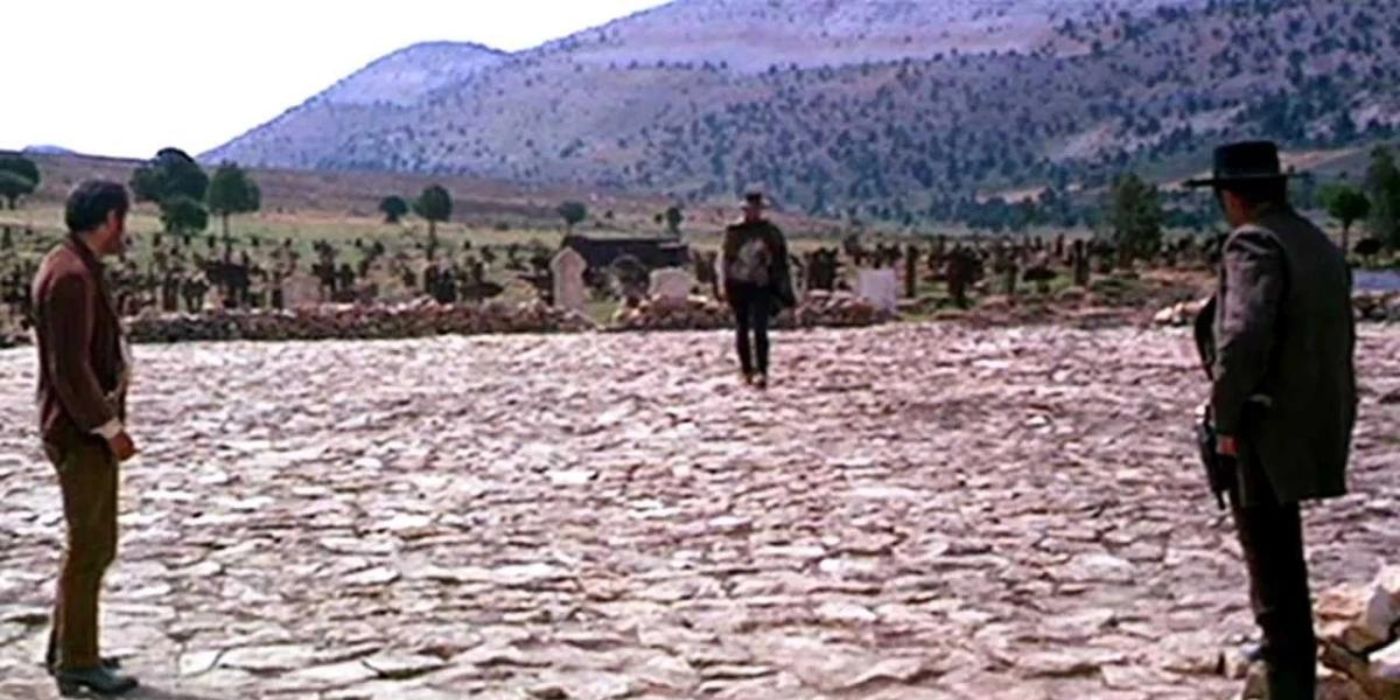
Wait until the State makes its moves.
- You are not the Good
- You are not the Bad
- You are not the Ugly
You are worse — the self-destructive. You do not choose, do not work, do not strive, do not fight, do not help, and yet you still want the right to quarrel with your Father over the toy that reality cannot offer you.