Seigniorage
January 25, 2026
Seigniorage is the profit from the monopoly of currency issuance.
Seigniorage is the compensation the State obtains from the monopoly of currency issuance. In simple terms: it is the profit that the government (or central bank) generates by creating money out of nothing to finance its spending.
The Royal Fifth
During the time of Colonial Brazil, the Gold Cycle caused a certain rush in search of enrichment. Portuguese and Brazilians moved to the mining regions, where they would try their luck to acquire gold. However, the Portuguese crown intervened, imposing taxes on the gold obtained.
The Portuguese Crown already understood this game well. All extracted gold had to pass through the Smelting Houses. There, in addition to sealing the bars with the royal mark, the crown charged the famous “fifth” — 20% of everything that was mined. It was a direct, visible, and brutal tax on production.
The tax worked as follows: all gold found had to be sent to the Smelting Houses, melted down and turned into bars, which bore the Crown’s seal. During this process, a tax was already collected: the “fifth,” which meant the collection of one-fifth of all gold found. The Portuguese Crown, in 1750, began taking the fifth directly at the smelting houses. This gold was collected and sent to Portugal on ships known as “naus dos quintos” (fifth ships).
Today the mechanism is much more sophisticated… and much more powerful.
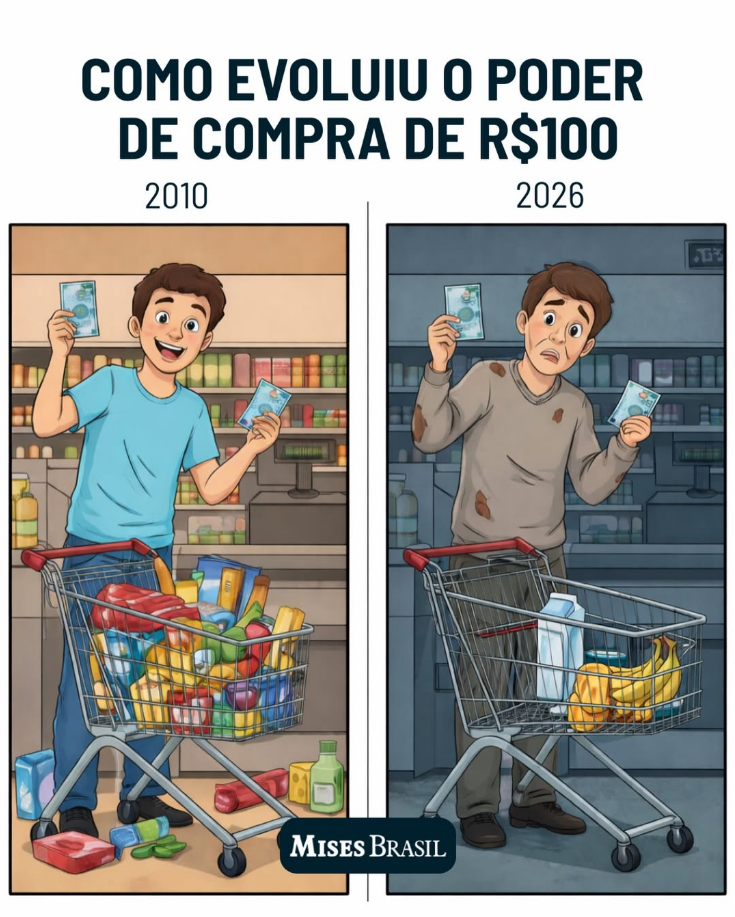
Instead of demanding 20% of newly extracted gold, the modern State simply prints the currency it needs. It doesn’t have to wait for the miner to arrive at the smelter. It creates the money even before the citizen produces anything. The cost? Inflation — which dilutes the purchasing power of everyone who holds reais, saves, or receives a fixed salary.
It is the same old robbery. Only now it’s invisible, progressive, and almost undetectable to the majority of the population.
This ability to finance spending without openly raising taxes is what allows the State to live far beyond its means — transferring the real cost to society through the silent loss of the currency’s value.
And this is precisely where the most perverse effect of seigniorage comes in: it trains the entire society to have high time preference.
High Time Preference: The Urge to “Spend Now”
Time preference is a concept from Austrian economics (inspired by thinkers like Ludwig von Mises and Murray Rothbard), which measures how much we value the present relative to the future. A low time preference means patience: saving today to reap more tomorrow, investing in education, businesses, or assets that grow over time. High time preference, on the other hand, is the opposite: prioritizing immediate consumption, even at the cost of the future.1
In environments of chronic inflation (such as that generated by seigniorage), money loses value quickly and the famous question — “Why save if today’s real will be worth less tomorrow?” — makes inflation a perverse incentive for instant-gratification seekers, people who live buying consumer goods, travel, or luxuries — instead of investing in something productive. Inflation is the perverse driver of high time preference: if the government “prints” to finance its deficits, the ordinary citizen feels the squeeze and reacts by consuming faster, avoiding the erosion of purchasing power. The fiat monetary system is the “training” that makes society impatient.2
When we prioritize the now, we resort to loans, credit cards, and financing to consume beyond what we earn. At the individual level, this creates snowballs: compound interest devours the future, turning dreams into nightmares. Governments also fall into this trap. To finance excessive spending (without raising visible taxes), they issue more currency via seigniorage, which generates inflation and growing deficits. Result? More public debt, rolled over with new issuances or debt bonds.
The monopoly on currency allows the State to live beyond its means, transferring the cost to society via inflation.
High inflation (a product of seigniorage) raises time preference; people go into debt to maintain their standard of living; banks profit from interest, but the economy as a whole suffers from low productive investment. In Brazil, recent data shows that more than 70% of families are in debt, often due to impulsive consumption driven by currency devaluation.3
Modern Seigniorage
It works like this: the government issues money (prints notes or creates digital currency) at a very low cost (nearly zero, basically paper + ink or computer bits) and manages to buy real goods and services with this newly created money, which is worth its face value.
Classic example: the government spends this new money before the inflation caused by the extra issuance spreads through the economy. Those who receive it first (government and its suppliers) win; those who receive it last (savers, salaries losing purchasing power) lose.
It is a kind of “invisible tax” or inflation disguised as revenue for the State.
— “Negative interest is the increase of the MONETARY BASE, which is currently 20% per annum.”
Upon hearing phrases like this, it becomes clear that you are impoverishing yourself by 20% per year by accepting that fiat money (Real) is your nominal and accounting standard value. But the rabbit hole goes deeper, since the 20% per year doesn’t even account for the difference in calculation including the Brazilian GDP — which hasn’t recovered since 2011. However, if you keep reais at home, you will be impoverishing yourself until monetary collapse while waiting for another Itamar Franco.
Because:
- The government will keep its unregulated printing.
- The elderly, whose numbers keep increasing because life expectancy is higher than three decades ago: will continue to be “the remunerated unproductive.”
- Brazil’s productivity has fallen by half due to the steady decline in fertility rates, and the number of people constantly increases with few divisible riches.
Your earnings will be diluted by 60% per year or you will be permanently forced to invest in an inflationary regime.
If gasoline today is more expensive than in 1994. If food prices are more expensive than in 1994. This is not because of price increases. Rather, it is due to the increase in the indices: M1, M2, and M3; unpaid debts due to low population and productive growth. Who pays this bill? The “useful idiots” who still believe that changing the financial system or their quality of life by accumulating reais is a possibility.
Kurzgesagt: You pay and line the pockets of politicians, financing their choice to do whatever they want with your money.
Your hands are soiled by the collection of principalities and powers — which the Lord Himself renounced in His dependence.
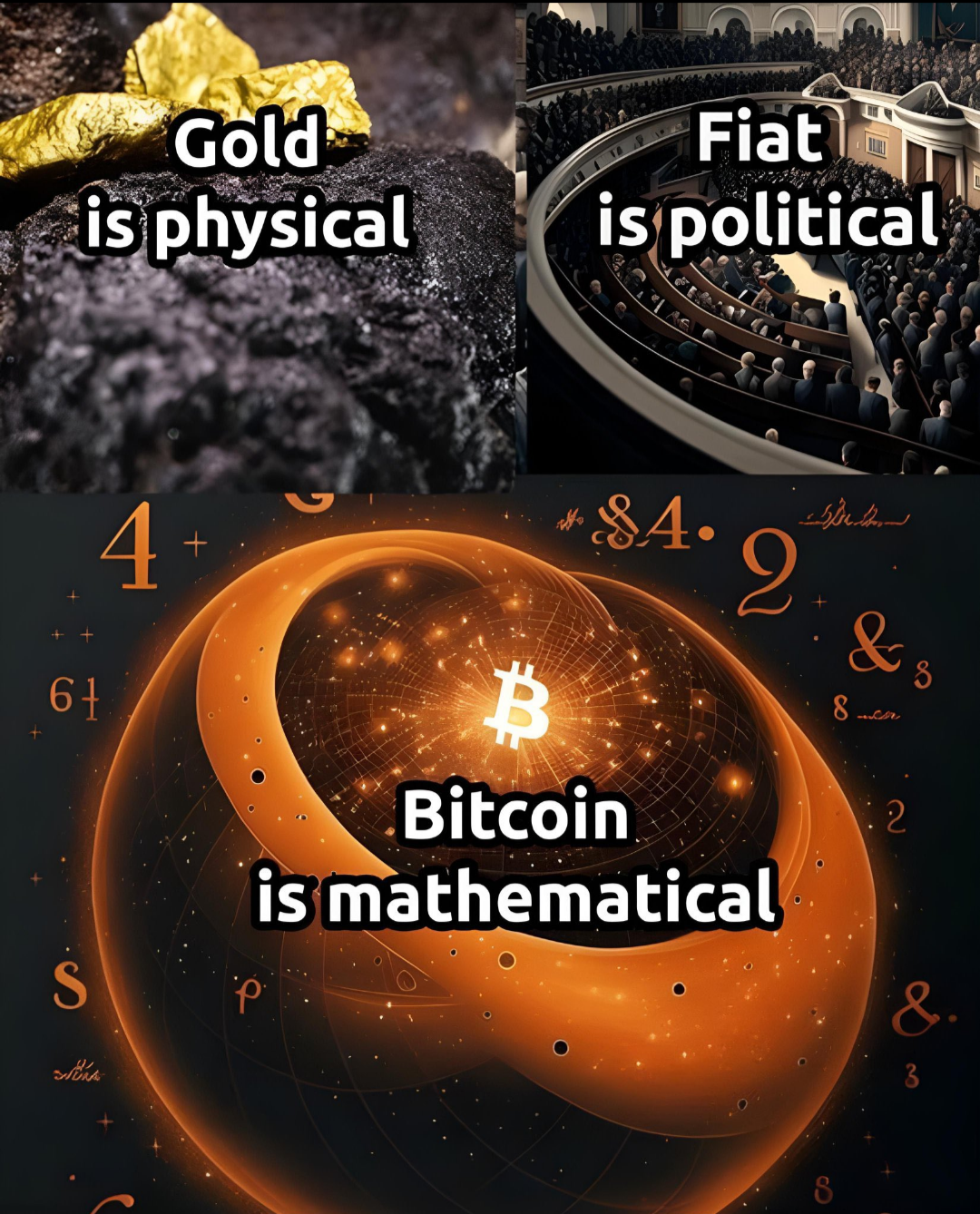
Do not be an accomplice. There is already an alternative. The perfect antithesis is Bitcoin.
See also
Video about Seigniorage - Arata Academy
A brief history of the Real Plan, at 18 years - Leandro Roque - (Original Article)
Interest is negative after 2008 - Renato Amoedo
CHAPTER 11 TIME AND TIME PREFERENCE. [s. d.]. Mises Institute. Available at: https://mises.org/online-book/mises-reader-unabridged/chapter-11-time-and-time-preference. ↩︎
Seigniorage /ˈseɪnjərɪdʒ/, also spelled seignorage or seigneurage (from Old French seigneuriage, “lord’s right (seigneur) to mint coin”), is the profit a government obtains by issuing currency. This profit corresponds to the difference between the face value of the money and the cost of producing it. ↩︎
EDUARDO; EDUARDO. Brazilians end 2025 more indebted than in 2024 - Portal do Comércio. Jan 13, 2026. Portal do Comércio - National Confederation of Commerce in Goods, Services and Tourism. Available at: https://portaldocomercio.org.br/acoes-institucionais/brasileiro-encerra-2025-mais-endividado-do-que-em-2024/. ↩︎